
Offering a FREE Weekly Moms Walk & Talk Group Wednesdays at 9:30 AM- Elizabeth Park, West Hartford

Maternal Mental Health
Support for Pregnancy, Postpartum, and Every Stage of Motherhood
As Moms, we’re holding alot.
Motherhood changes us in ways we don’t always expect. From trying to conceive to pregnancy, postpartum, raising children, and navigating the evolving demands of family life, each stage of motherhood brings unique joys, challenges, and transitions. Many women come to therapy feeling overwhelmed, anxious, disconnected from themselves, or exhausted from carrying so much for everyone around them.
You Might Be Experiencing…
- Emotional exhaustion from carrying the mental load of motherhood & other competing responsibilities
- Persistent worry about your children, family, or the future
- Feeling emotionally overwhelmed, irritable, or easily tearful
- Difficulty slowing down, resting, or finding time for yourself
- Intrusive or distressing thoughts that feel hard to talk about
- Feeling disconnected from yourself, your body, or your sense of identity
- Anxiety, sadness, or difficulty adjusting during pregnancy or after the birth
- Stress related to infertility, pregnancy complications, or loss


How Therapy Can Help
Therapy offers a space to slow down, make sense of what you’re carrying, and feel more grounded through the many transitions of motherhood. Together, we can focus on supporting both your emotional wellbeing and your day-to-day life in ways that feel sustainable and realistic.
Our work together may focus on…
Reducing anxiety, overwhelm, and emotional exhaustion
Navigating fertility, pregnancy, postpartum, & new motherhood
Strengthening boundaries, communication, and relationships
Making space for your own needs, goals, & identity alongside motherhood
Processing grief, loss, and difficult experiences with compassion and support
Managing the mental load and invisible demands of motherhood

Therapy that meets you where you are…
This season of life often requires more flexiblity, support and intention than traditional therapy models. I offer options like in-home sessions, walk & talk therapy, & virtual sessions to make care feel more accessible and integrated into your life.
As a mom of three, I know firsthand that motherhood can be beautiful, overwhelming, exhausting, and everything in between. My approach is grounded, relational, and paced with care for where you are right now. I have advanced training in maternal mental health through Postpartum Support International, and I bring that specialized lens to my work with mothers and those hoping to become mothers.
Sessions are collaborative and supportive, and we can focus on whatever feels most present—whether that is anxiety, grief, identity shifts, intrusive thoughts, or simply needing space to talk and be understood.
If you’re interested in working together, schedule a consultation to see if this feels like the right fit.
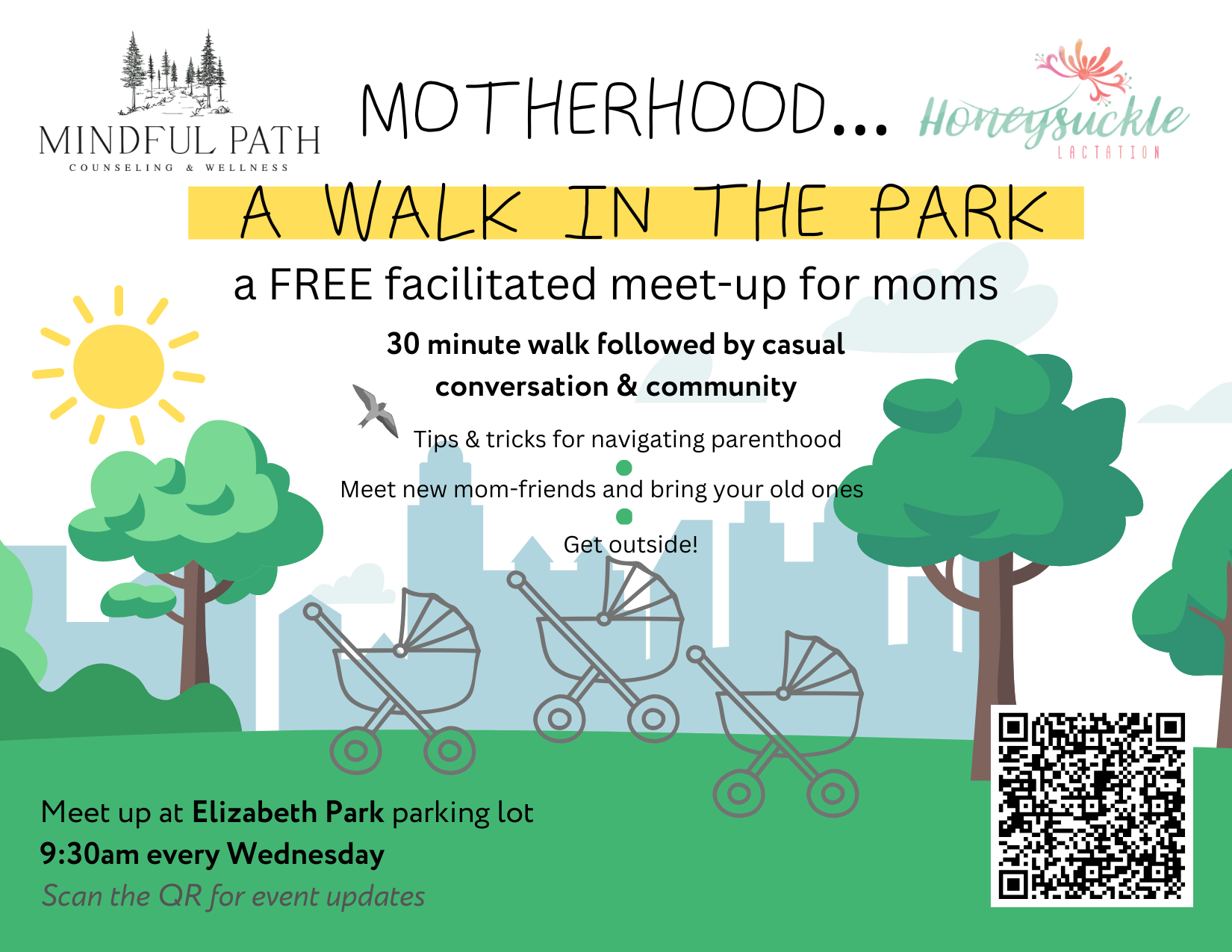
Free Walk & Talk For Moms
Motherhood wasn’t meant to be done alone.
Join us for a relaxed weekly walk designed to help moms connect, get outside, and build community. This free group is co-hosted by Mindful Path Counseling & Wellness and Honeysuckle Lactation, creating a welcoming space for mothers at every stage of the journey. Simply show up when you can. Wednesday mornings at Elizabeth Park in West Hartford. Babies & strollers encouraged!
Free • No Registration Required • Come As You Are
Now Featuring…
The Fourth Trimester Support Package
In-home therapy for the early months of motherhood
The postpartum period can feel both deeply meaningful and unexpectedly overwhelming. Many new mothers experience shifts in identity, mood, relationships, and nervous system regulation that aren’t always visible to others.
This package offers support right where you are—in your home—so you can be held emotionally during one of life’s most vulnerable transitions.

Frequently Asked Questions
How do I know if I’m experiencing postpartum depression or anxiety?
Postpartum depression and anxiety can look different for everyone and doesn’t always feel extreme or obvious. You may notice persistent worry, emotional overwhelm, intrusive thoughts, or difficulty doing things that were once easy for you.
If something feels heavier than expected or hard to manage alone, it may be worth reaching out for support. You don’t need to wait for it to feel severe.
What if it’s hard for me to leave the house right now?
That’s completely okay.
I offer multiple ways to meet, depending on what feels most supportive for you. I offer virtually therapy throughout CT, MA, & PA, Walk & Talk sessions in the West Hartford area (babies welcome), and in-home sessions, which can be helpful in those early postpartum days.
The goal is to make therapy feel possible—not like another overwhelming task.
Should I wait until after my baby is born to start therapy?
You don’t have to wait.
Many people find it helpful to begin therapy during pregnancy or while trying to conceive, especially if there’s a history of anxiety, depression, or emotional overwhelm.
Starting sooner can help you build a sense of support in advance, so you’re not trying to find help for the first time during an already intense transition.
What if I’m struggling with infertility or pregnancy loss?
Infertility and pregnancy loss can bring a deep emotional impact, including grief, anxiety, and uncertainty that may feel hard to carry alone. These experiences are often invisible to others but very real internally.
Therapy offers space to process what you’re going through at your own pace, without pressure to move on or make sense of it before you’re ready.
Let’s talk.
You don’t have to figure this out on your own.